Technology ·
Everyone in their own language: AI translation at the Congress
At the 37th Congress surgeons and speakers spoke their own language and artificial intelligence translated them live into Italian, English and Chinese. How it works and why we do it.
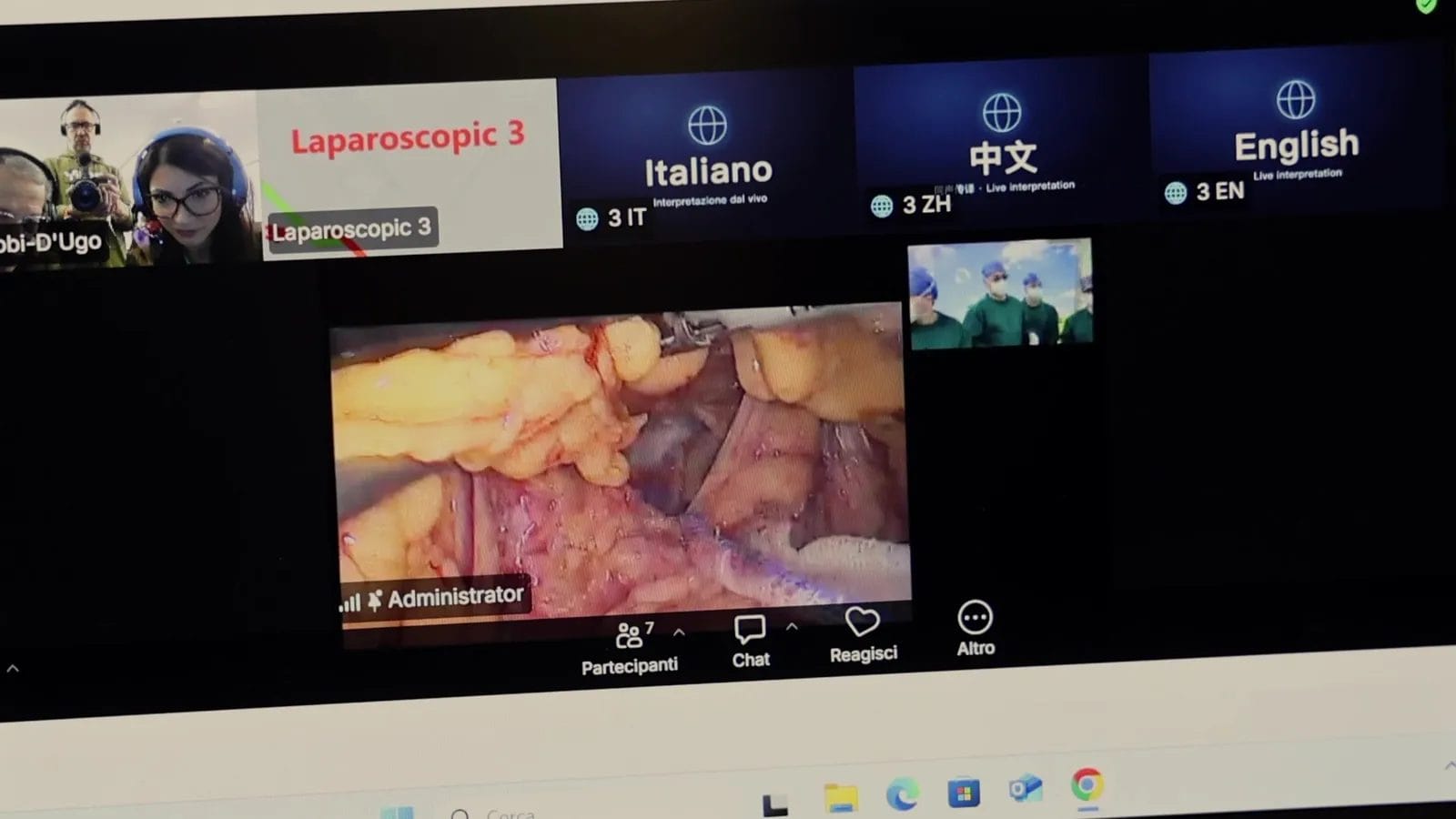
At an international congress, language has always been a compromise: everyone speaks English, even those who speak it poorly, and those who don’t understand it well miss part of the discussion. At the 37th Congress of Digestive Surgery we tried a different way: everyone speaks their own language, and artificial intelligence does the rest.
How it works
The operating surgeon, the speaker connected from abroad and the moderator in the hall each speak their mother tongue. The AI listens to the session live, translates it and returns the translated voice on a separate audio channel while the session is still running.
The languages are Italian, English and Chinese.
For viewers at home
In the laparoscopic.it player you choose the language with one tap: you switch from the original audio to the translation and the video keeps playing. The languages only appear while the translation is actually on air, so no one faces a button that doesn’t work.
For moderators
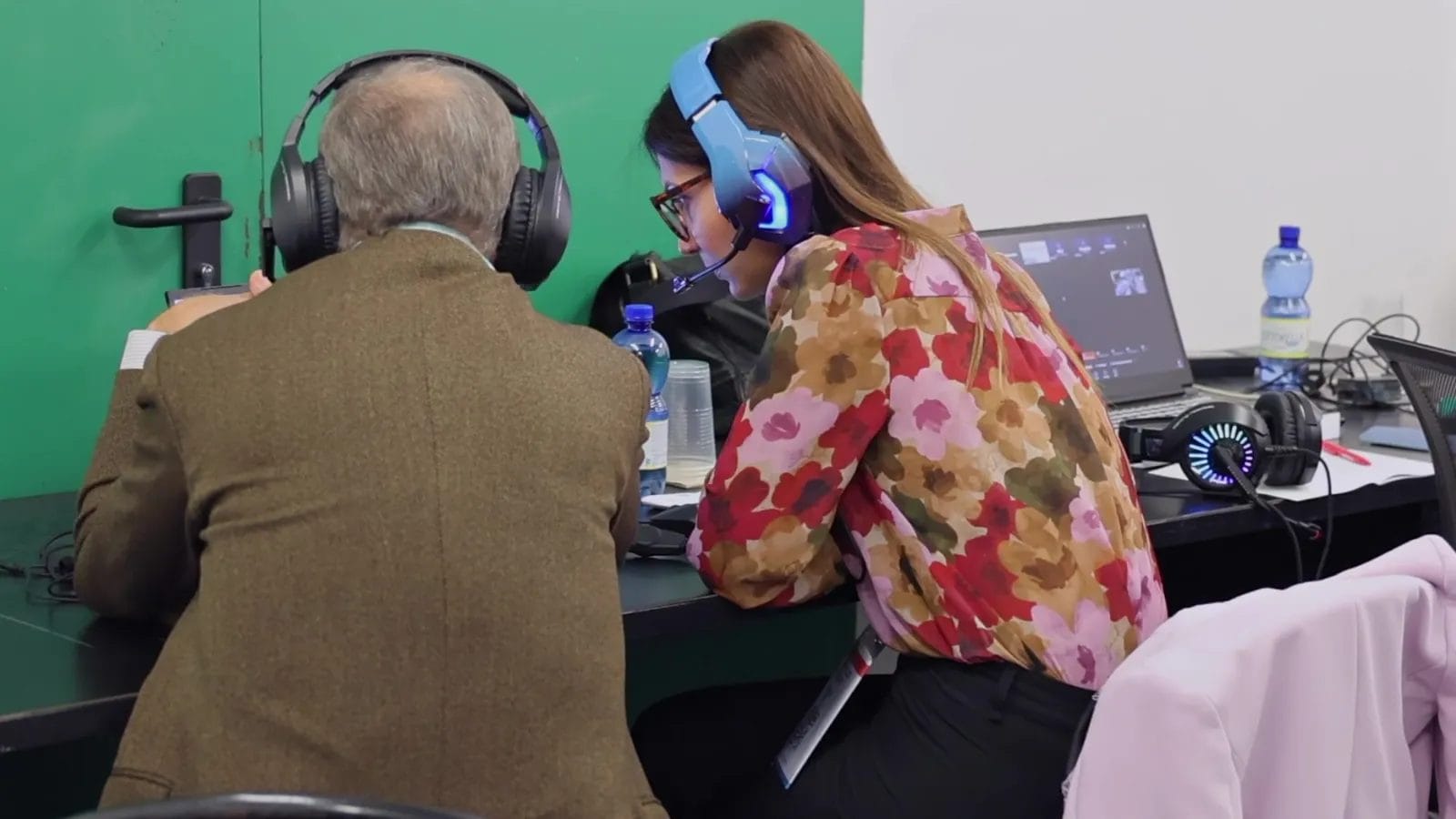
Moderators also choose which language to listen to. An Italian moderator can follow a Chinese speaker in Italian and answer in Italian: the AI carries the answer into the speaker’s language.
The language of surgery
Translating an operating room is not like translating a conversation. Anatomical structures, procedures, devices, lymph node stations: one wrong technical term changes the meaning of a sentence. That is why the translation relies on a glossary built for the congress, in Italian, English and Chinese, including the speakers’ names.
Why we do it
The Congress exists to show surgery as it happens and to discuss it with those who perform it. When language is a barrier, part of that discussion is lost. Real-time translation lets surgeons explain their operation with the precision of the language they think in, and lets viewers understand it in theirs.
An experiment to improve
At the 37th Congress real-time translation was an experiment. It showed us what works and what needs to improve. At the 38th Congress AI translation returns, improved, and we want to bring it to even more sessions. Read also how AI joined the operating room as a moderator.
The translation is generated by artificial intelligence and may contain errors. For important passages, the original audio prevails.